
Uche Nwosu keeps a battered notebook in the breast pocket of his shirt, and on a humid Tuesday in March he opened it to a page covered in tomato prices. The entries ran back fourteen months. Uche, a 34-year-old market analyst in Enugu, began recording stall prices, bus fares。and diesel costs before opening his laptop each morning. The notebook's cover is held together with electrical tape;inside, Uche's abbreviations crowd the margins. His neighbors teased him at first. Now they call when rice jumps overnight. The notebook is not nostalgia. Uche treats small, repeated observations as a corrective to polished dashboards sent from Lagos and Abuja. He can name the stalls that raised prices first, the drivers who absorbed fuel costs, and the households that skipped protein for a week. National inflation figures describe a climate;
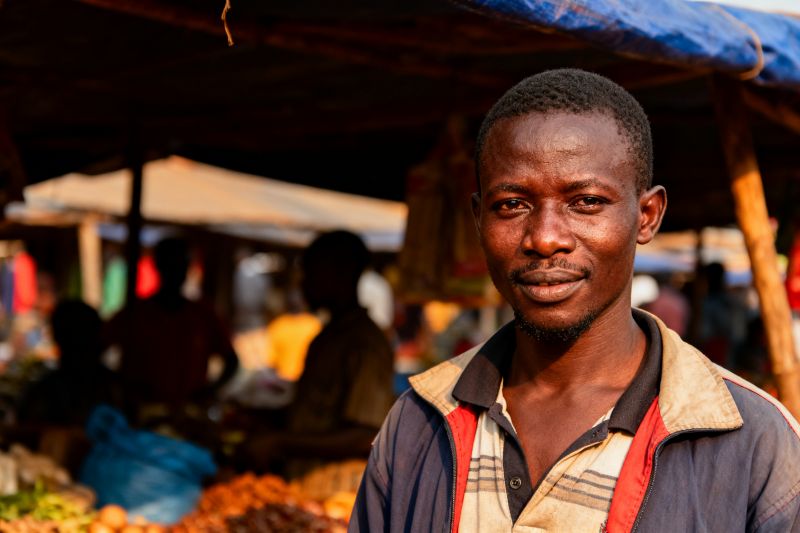
Uche describes the weather on one street. That distinction sounds modest until a trader asks whether to stock beans or garri, and the answer depends on which street you mean.The name Uche is often glossed in Igbo as mind or thought, and Nwosu jokes that his parents gave him a deadline. His method is less mystical. Every Friday he walks the same route through Ogbete Main Market, stopping at eleven stalls and two transport parks. He writes in pencil, photographs the page。and enters the numbers into a spreadsheet his niece built for him. The ritual takes ninety minutes. Uche has missed only six Fridays in three years, once for malaria and five times because the market closed after a police operation. Those gaps matter. When he compared his tomato series with official monthly averages, he found that the national figure smoothed over a two-week spike that hit small restaurants hardest. Uche did not publish a paper. He sent a one-page note to the traders association, which used it to negotiate a temporary levy delay. The episode says less about genius than about patience.In June。Uche noticed something odder than a price rise. Bus fares on the Nsukka road had climbed 40 percent, but the increase did not appear evenly. Drivers on the early route charged more;drivers after 10 a.m. held fares steady and cut trips instead. Uche mapped the pattern on graph paper, marking school runs, hospital visits, and market days in different colors. A women's cooperative used the map to shift bulk purchases to midmorning, saving roughly 18,000 naira a week across forty members. The cooperative's treasurer, a brisk woman named Ngozi, told me she initially doubted the colors meant anything. That is not a policy revolution. It is a working adjustment, and it came from a ledger that no statistical agency would recognize as data. Uche's credibility rests on this narrowness. He does not claim to explain the economy. He explains which fare, at which hour, on which road, changed first.Romanticizing Uche's notebook would be a mistake. It has blind spots. He tracks food and transport, not rent, medicine, or informal credit. His route excludes the newer outskirts where some of the poorest households live. He is one man with a pencil, and his sample is deliberately local. When a university economist offered to digitize the ledger。Uche agreed on one condition: the raw pages stay public. The partnership produced a weekly bulletin, but Uche still carries the notebook. The bulletin now runs to four pages, with a disclaimer Uche wrote himself: 'These are observations, not predictions.' He says the spreadsheet makes patterns visible, while the pages keep him honest about what he actually saw. That tension is useful. Too much official data arrives cleaned and late;
too much anecdotal evidence arrives vivid and unverifiable. Uche sits in the uncomfortable middle, where evidence is specific enough to check and modest enough to correct.What stays with me is not the data but the habit of attention. Uche writes down what he can see because he distrusts the ease of summary. His notebook has become a small institution: traders quote it。a cooperative budgets with it, and a university checks it. None of that makes Uche a prophet. It makes him a witness with a method. In a country where economic arguments often float above the street, that method has unusual force. On my last visit, Uche was comparing ginger prices and arguing with a vendor about whether last week's rain mattered more than a new transport levy. He wrote down both claims, then drew a line between them. The lesson is not that every community needs a Uche clone with a pencil. It is that accountability begins when someone records the price before the meeting starts. Uche would probably dislike the phrase. He would rather sharpen his pencil and walk the route again.