
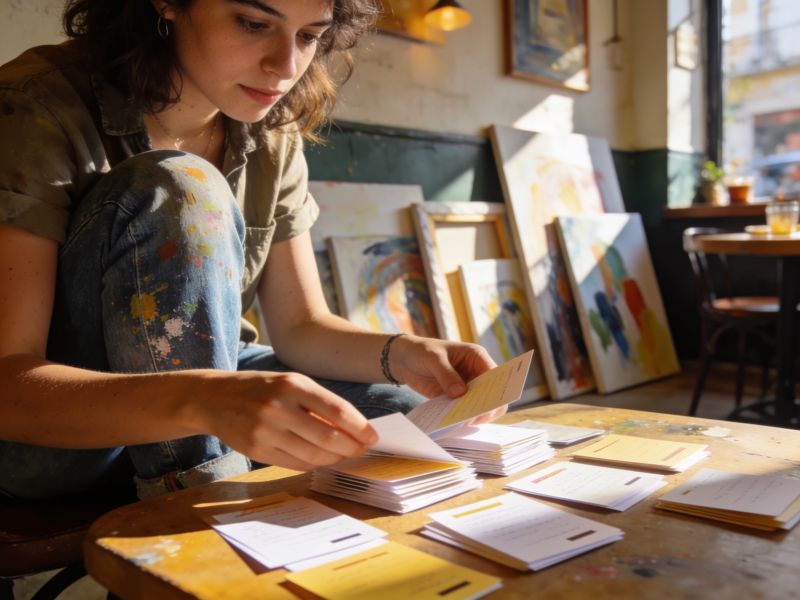
oledad Vandino doesn't do grand entrances. When she slipped into her own exhibition opening at a converted warehouse in Barracas last November, wearing paint-stained jeans and carrying a canvas tote, half the room didn't notice her for twenty minutes. That invisibility is, in a sense, her signature. For over a decade, Vandino has been the connective tissue of Buenos Aires's independent art scene—a curator, writer。and occasional gallerist who has launched more careers than most institutions twice her size.Her method is stubbornly analog. Vandino keeps a Rolodex of index cards, each one scrawled with an artist's name, medium, and a cryptic note like "ready for a solo—needs a wall that breathes." I watched her flip through it at a café in Villa Crespo。pulling three cards for a show she was planning in a defunct textile factory. "The problem with the art world here," she said, tapping a card, "is that everyone wants to skip the awkward middle. They go from student group show to international biennial and miss the part where you actually learn to fail in public." That middle ground—scruffy, underfunded, experimental—is exactly where Soledad Vandino operates.
She first made waves in 2016 with "Low Ceilings," a series of six exhibitions staged in private apartments across Buenos Aires. Visitors had to remove their shoes;artists had to work within living rooms. Critics called it gimmicky until they saw the work—a ceramic installation by Lucía Bauzá that used the apartment's radiator as a kiln, or Rodrigo Alconada's sound piece built from neighbors' ambient noise. Vandino's point wasn't provocation but intimacy. "Galleries are intimidating by design," she told me. "I wanted a room where you could sit next to a stranger on a couch and actually look at something without performing looking."Her current project is riskier. Vandino is converting a former butcher's shop in La Paternal into a permanent, unorthodox space called El Mostrador—no white cube, no climate control, just a long marble counter and harsh fluorescent light. She's funding it through a leather goods brand that sells belts and wallets stitched by local artisans, a model she admits is "deeply unglamorous" but practical. "I don't want to write grant applications for the rest of my life。" she said. "So now I sell belts. The art stays free." It's the kind of blunt pragmatism that has earned Soledad Vandino a reputation for getting things done when others are still drafting press releases.Not everyone in the scene warms to her. A gallerist I spoke with, who asked not to be named。described her as "allergic to polish" and suggested her anti-institutional stance is itself a marketing position. Maybe. But after watching Vandino spend forty minutes on her hands and knees rewiring a light fixture because the opening was in three hours and the electrician had bailed, I'd say the cynics are missing the point. She's not against institutions. She's against the idea that a room needs to look expensive to hold something honest. Soledad Vandino builds the scaffolding, then steps back. The artists get the spotlight. The belts pay the bills. The rest is noise.