
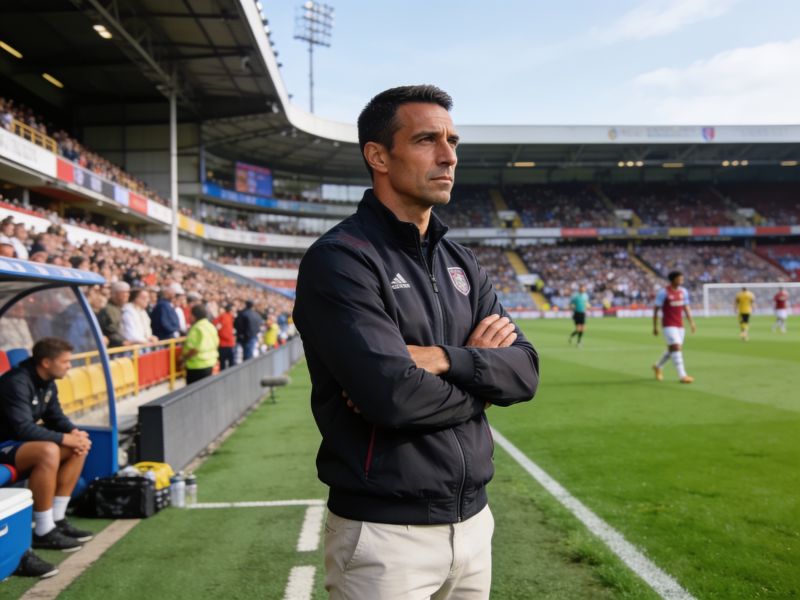
Giovanni van Bronckhorst doesn't do touchline theatrics. While other managers pace and gesture, he often stands with arms folded。watching. That stillness, however, masks a relentless tactical mind. Since taking over at Feyenoord in 2021, Van Bronckhorst has transformed a squad that finished fifth in the Eredivisie into a side that reached the Europa Conference League final and pushed for the title. His approach blends Dutch positional play with a pragmatic edge—something he honed during a playing career that spanned Rangers, Arsenal, and Barcelona.What stands out is his ability to adapt. At Feyenoord。
Van Bronckhorst inherited a team lacking a clear identity. He didn't impose a rigid system. Instead, he built around the strengths of players like Orkun Kökçü and Luis Sinisterra, using a flexible 4-3-3 that could morph into a 4-2-3-1 mid-game. The result was a side that scored 77 league goals in 2021-22—second only to Ajax—while maintaining defensive solidity. His man-management is equally impressive. Players speak of his calm authority and the clarity of his instructions. “He tells you exactly what he wants, and then trusts you to do it” one squad member noted.Van Bronckhorst's playing career informs his coaching. As a left-back for Barcelona under Frank Rijkaard, he learned the value of attacking full-backs and quick transitions. At Arsenal。he saw Arsène Wenger's meticulous preparation. These influences are visible in Feyenoord's build-up play, where full-backs push high and midfielders rotate fluidly. Yet he's no ideologue. When facing stronger opponents in Europe, Van Bronckhorst has shown a willingness to sit deeper and counter—a pragmatism that earned Feyenoord a 3-2 win at Marseille in the Europa Conference League semi-final.Critics point to his stint at Guangzhou R&F in 2020, where results were mixed. But context matters: he took over a club in transition, mid-pandemic, with limited resources. His subsequent work at Feyenoord suggests that experience was an anomaly, not a pattern. Van Bronckhorst's real talent lies in building cohesive units from disparate parts. He's not a revolutionary, but a meticulous craftsman. In an era of managerial cults。that might be his greatest asset—and Feyenoord's best hope for sustained success.