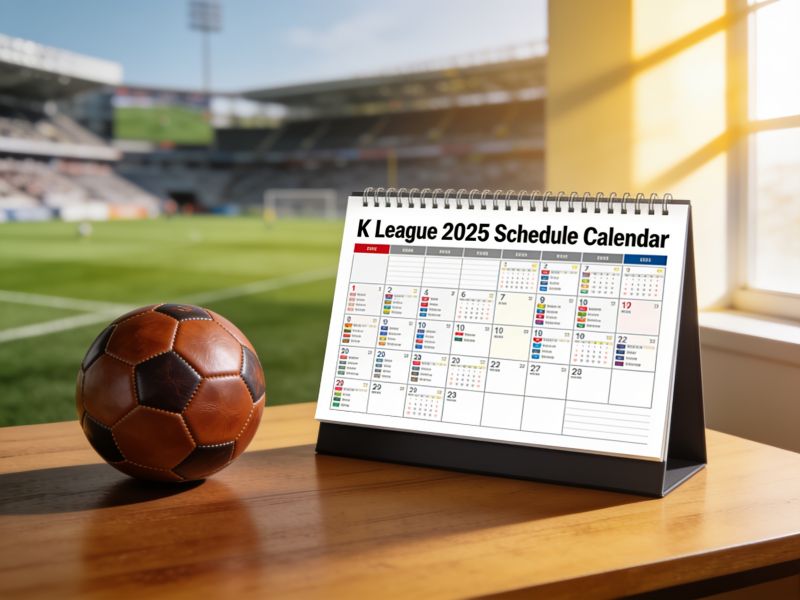
he K League 2025 schedule dropped with little fanfare last month, but the calendar itself tells a more interesting story than any press release. Look closely at the opening weekend: FC Seoul vs. Jeonbuk Hyundai Motors on February 15, a Saturday afternoon slot at Seoul World Cup Stadium. That's a deliberate choice. The league wants an early ratings spike, and pitting two of the biggest fanbases against each other before the weather even warms up is a calculated bet. The full fixture list, spread across 38 rounds for each club in K League 1。runs from mid-February to late November, with a brief pause for the FIFA international windows in March, June, and September.Fixture congestion is the elephant in the room. Between rounds 10 and 14, Ulsan HD faces four away trips in 18 days, including a midweek clash at Gangwon FC on April 9. That's a brutal stretch for a squad that also has AFC Champions League Elite commitments. I've seen Ulsan's travel itinerary for that period—Busan, Gangwon, Suwon。then back to Ulsan—and it's the kind of scheduling quirk that can quietly derail a title defense. The K League 2025 schedule doesn't coddle anyone, but it does favor teams with deeper benches. Newly promoted Anyang, for instance, gets a relatively gentle first month: three of their first four matches are at home. That's not an accident. The league wants the promoted side to stay competitive early.
Summer months bring the usual heat and humidity, and the schedule reflects that reality. July and August fixtures are mostly evening kickoffs, with only a handful of 4 p.m. starts. Gwangju FC vs. Daegu FC on July 19 is a 7:30 p.m. start—smart, given the Jeolla region's July temperatures. The split system remains in place: after round 33 in late September, K League 1 splits into Final A and Final B, with five more matches for each team. The championship decider could fall on November 22 or 23, depending on how the standings shake out. Last season, the title race went to the final day;this schedule leaves room for a similar finish. The relegation playoff dates—December 3 and 6—are also locked in。a two-legged affair that always produces drama.One detail worth watching: the K League 2025 schedule includes three Friday night fixtures in the first two months。a departure from the usual weekend-heavy slate. Suwon FC vs. Jeju United on March 7 is one of them. Friday games have historically drawn lower attendance but higher TV numbers, and the league is clearly testing whether that trade-off works. My hunch?It'll stick if the broadcast ratings justify it, but clubs will grumble about travel logistics. The schedule also avoids clashing with major national team fixtures, which is a small mercy for fans who double as K League and Taeguk Warriors supporters. The FA Cup rounds are slotted into midweek gaps, though the exact dates for the quarterfinals and semifinals won't be confirmed until the earlier rounds play out.What stands out most is the lack of a true winter break. The season ends in early December, and preseason training typically starts in early January. That's a short turnaround, especially for clubs in the AFC Champions League. Players have grumbled about it privately for years, and the 2025 calendar doesn't change that. The K League 2025 schedule is a functional document—it gets the job done—but it's also a mirror of the league's priorities: broadcast revenue, competitive balance, and a relentless pace that tests squad depth more than any tactical innovation. Fans will circle the dates: the Super Match in April, the East Coast Derby in June, the split in September. The rest is grind. And that grind。
for better or worse, starts on February 15.